Greece is seeking to attract more investment from the United Arab Emirates as the two countries deepen economic ties and explore opportunities across strategic sectors, including energy, technology, logistics and infrastructure.
On Thursday, Greece and the UAE announced 18 memoranda of understanding, agreements and commercial partnerships valued at €12.75 billion ($14.30 billion). Abu Dhabi also announced plans to invest an additional €15 billion in Greece, according to the Abu Dhabi Media Office and reported in Reuters.
The announcements were made at the UAE-Greece Strategic Forum in Athens, attended by Greek Prime Minister Kyriakos Mitsotakis and Abu Dhabi Crown Prince Sheikh Khaled bin Mohamed bin Zayed Al Nahyan. The crown prince also held talks with Mitsotakis on expanding cooperation in energy, infrastructure and health care.
The additional investment plan builds on a joint investment initiative launched in 2022, under which the two countries committed €4 billion. The Abu Dhabi Media Office did not disclose the specific investments planned under the new initiative.
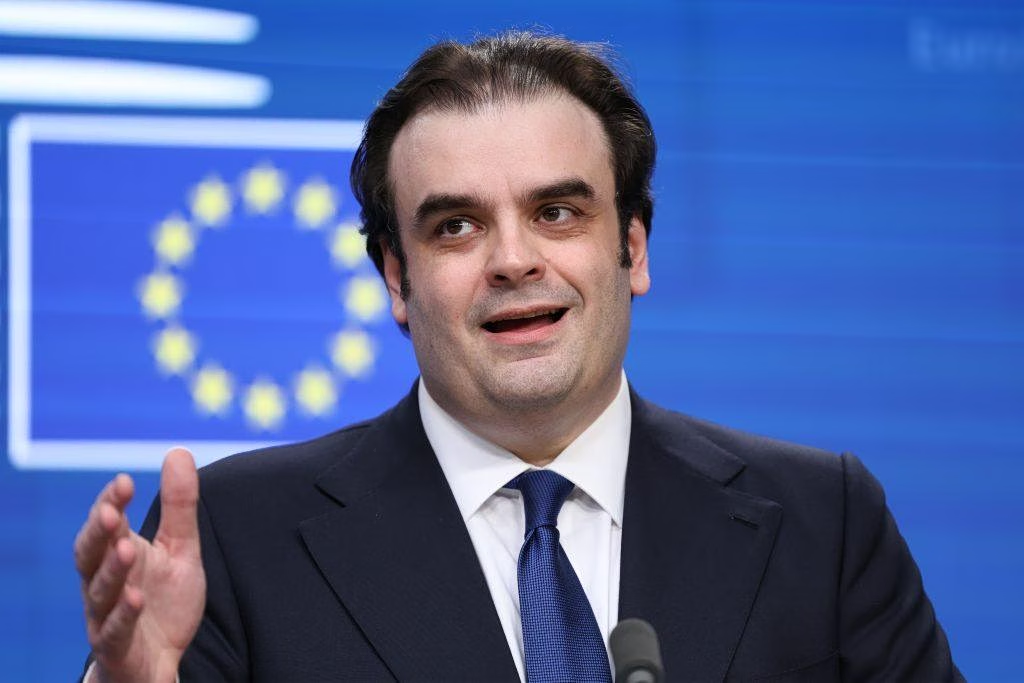
Speaking at Investopia in Athens on October 22, Greek Finance Minister Kyriakos Pierrakakis, who is also president of the Eurogroup, said closer ties with the UAE could help Greece serve as a gateway to the European Union’s single market, while the UAE could provide Greek businesses with access to the Middle East and other strategic economies. “We want to see more such investments coming,” Pierrakakis said, describing the two countries as natural partners.
He identified the India-Middle East-Europe Economic Corridor (IMEC), shipping, investment and logistics as areas with significant potential for cooperation. Realizing that potential, he said, would require governments to create favorable conditions and remove barriers, leaving businesses and investors to determine which companies and sectors could deliver the greatest opportunities.
The discussion took place during a session titled “Connecting Markets in a Time of Global Change,” which also featured UAE Minister of Investment Mohamed Hassan Alsuwaidi.
The UAE was Greece’s most important trading partner in 2024, with existing investments spanning energy, health care, technology and tourism.
Higher interest rates put pressure on Europe
Pierrakakis also warned that Europe was operating in a more demanding economic environment, despite demonstrating resilience.
He pointed to the rise in average European 10-year government bond yields, from 1.1% a decade ago to 4% currently, as evidence that the era of cheap capital had ended.
He identified six pressures contributing to the challenging environment: energy costs, geopolitical instability, greater fiscal constraints, increased investment needs, rising social spending and competition for capital from technology companies.
Europe faces growing investment demands, including spending on defense and measures to unlock its economic potential. Aging populations are also increasing pressure on public spending, he said, while the average European deficit is now twice what it was in the past.
Artificial intelligence is adding another dimension to the challenge. Pierrakakis described AI not only as a disruptive technology but also as a macroeconomic force, arguing that governments are competing with major technology companies that provide cloud-computing infrastructure to attract investment capital. That competition, he said, is pushing bond yields higher.
Given these pressures, he stressed the importance of collective action and identified the relationship with the UAE as a strategic priority for Greece.
AI requires faster policymaking
Pierrakakis said governments must move quickly to capitalize on artificial intelligence’s potential to improve productivity while managing its risks.
Technological change is now happening over weeks rather than years, he said, describing the pace of development as largely exponential. This creates a major challenge for policymakers, who must respond to emerging technologies while also addressing longstanding problems and implementing reforms that have been delayed for decades.
He also warned about the difficulty of preparing for unforeseen developments — what he called “unknown unknowns.”
Policymakers, he said, need the flexibility, speed, resilience and resources to manage both existing problems and unprecedented challenges.
UAE sees opportunities in logistics, energy and defense
Alsuwaidi said Greece’s geographic position could give it a greater role in trade between Europe and the Middle East, particularly amid disruptions around the Strait of Hormuz and the Bab el-Mandeb Strait, while commercial traffic continues through the Suez Canal.
Greece’s proximity to the canal could help it strengthen its position as a trading partner for countries in the Organization for Economic Cooperation and Development (OECD) and benefit from the redirection of trade flows, he said. Doing so would require greater investment in logistics, energy and essential infrastructure.
Alsuwaidi also highlighted opportunities for Greece and the UAE to work together on advanced technologies and defense solutions, including applications of artificial intelligence and robotics to protect borders and territory.
Greece’s large number of ports and the UAE’s wider regional security concerns offer potential grounds for cooperation, he said. He added that Greece could strengthen trade between Europe and the Middle East through the Red Sea and the Suez Canal.
AI, defense and health care top investment priorities
Asked where businesses from the two countries could work together, Alsuwaidi identified artificial intelligence, technology, defense, health care and modern logistics services as key areas.
He said the UAE could contribute its experience in AI and technology to joint projects, particularly in defense, health care and supply-chain services. Tourism also offers significant potential, he added, as Greece could attract more visitors amid changing international conditions.
However, Alsuwaidi said technology should remain the leading priority under current global circumstances, followed by defense and health care, which he described as sectors capable of changing people’s lives, with tourism also presenting an important opportunity.
The two officials’ remarks underscored a shared interest in expanding economic ties, using Greece’s position in southeastern Europe and the UAE’s investment and technological capabilities to develop new areas of cooperation.
Source: tovima.com
Πηγή: ot.gr